EV powertrain reliability hinges on how effectively heat is moved from high-density sources (inverter, OBC, e-motor controller) into structures that can dissipate it. This guide gives automotive buyers the frameworks, specifications, and standards needed to evaluate thermal management suppliers and products, including thermal silicone pads and supporting electrical safety equipment. Explore our product range to align specifications with your application here.
You’ll learn practical criteria to qualify vendors, set material specs, and structure RFQs for both large-volume and small-batch programs. For background on our manufacturing capability and supply assurance, visit About Us. This guide will answer critical questions like: How do you set heat-density-based TIM specs? Which certifications should be mandatory? How do you balance cost vs. performance across different EV subsystems?
Why Thermal Management Defines EV Powertrain Reliability
EV powertrains operate under sustained load with heat sources such as power modules, MCUs, and high-frequency drivers concentrated in compact assemblies. Without a robust thermal path, you risk derating, intermittent faults, premature aging, and safety incidents. A well-specified thermal stack ensures controlled junction temperatures, consistent dielectric strength, and stable interfaces through vibration and thermal cycling. Buyers should demand materials with proven high heat-density management, low volatility, and tight process controls to prevent pump-out, silicone oil bleed, and interface drift. When cameras and ADAS modules integrate near the powertrain, selecting pads that also protect optical imaging—avoiding contamination—is essential.
Supplier Selection Criteria for EV Thermal Interface Materials and Systems
Compliance and certification
Require documented conformity to RoHS, REACH, and applicable UL component certifications, plus adherence to automotive reliability baselines such as AEC-Q200 for passive components. This cuts qualification time and reduces downstream risk in audits.
Controlled supply chain and production
Prioritize suppliers with in-house factories and a controlled supply chain, covering design-to-assembly and large-scale raw material procurement, ensuring stable cost and quality. This guarantees consistent lot-to-lot performance and on-time delivery.
Design innovation
Value innovation in electronics and controls. Engineering teams experienced in precise actuation and intelligent control systems tend to build better thermal and electrical safety integration, enabling smarter thermal behavior under diverse load profiles.
Small-batch agility
Support for small-batch, multi-SKU mixed purchasing is vital for pilots and localized market validation. Agility here accelerates design verification while de-risking early procurement.
Specification & Sizing: Defining Your Thermal Pad Requirements
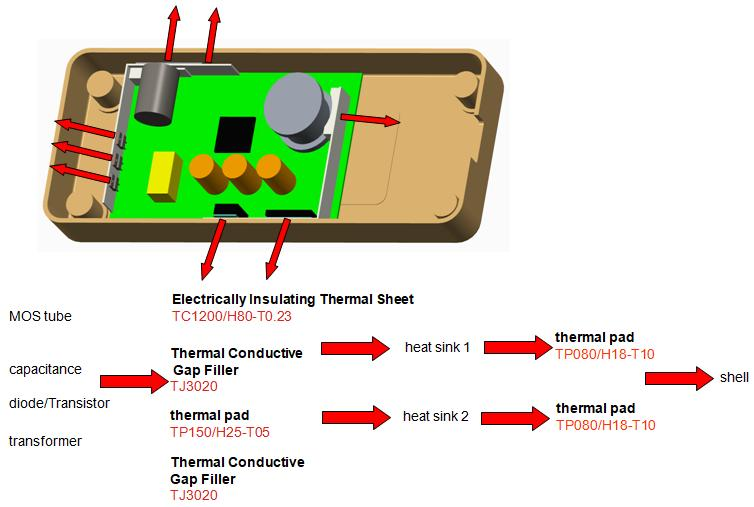
Start from heat density and mechanical stack-up. Define target thermal resistance, compression under assembly torque, dielectric and creepage requirements, and optical cleanliness where cameras or sensors are near high-power electronics. For silicone thermal pads, key ranges that buyers often specify include thermal conductivity of 1.0–15.0 W/mK, hardness of 20–80 Shore 00, thickness of 0.5–10.0 mm, and operating temperature of -40°C to 200°C. Insist on ROHS, REACH, and UL conformity, low volatility, low oil bleed, excellent insulation, and high compressibility. Custom cutting ensures perfect fit across different modules, minimizing assembly stress and microgaps.
| Material | Thermal Conductivity (W/mK) | Hardness (Shore 00) | Thickness (mm) | Operating Temp (°C) | Compliance | Key Features |
|---|---|---|---|---|---|---|
| TP Series Silicone Pad | 1.0–15.0 | 20–80 | 0.5–10.0 (customizable) | -40–200 | ROHS, REACH, UL | Low volatility, low oil bleed, excellent insulation, high compressibility; custom cut |
Flowchart: Thermal Pad Selection Process for EV Powertrain
Standards & Certification You Should Require
Demand proof and traceability. For chemical safety and market access, insist on REACH and RoHS compliance. Review UL component certification for electrical safety and conditions of acceptability. Align reliability baselines with AEC-Q200 for passive components, and ensure system-level processes reflect ISO 26262 functional safety where electronics govern safety-related behavior. Helpful references:
- Understanding REACH (ECHA)
- RoHS Directive (European Commission)
- UL Recognized Components & Certification
- ISO 26262 Functional Safety Overview
- AEC-Q200 Rev E: Passive Component Qualification
RFQ Checklist & Bid Evaluation
Structure RFQs to capture thermal performance, compliance, and manufacturability. Include conductivity targets, compression curves at assembly torque, dielectric strength, long-term aging at temperature, and oil-bleed/volatility benchmarks. Request PPAP-like data packages where applicable, plus evidence of controlled supply chain and capacity. Evaluate vendors on engineering support, custom cutting capabilities, and logistics coverage (multi-language support, voltage adaptation, compliant packaging, global shipping, and lifetime technical support).
| Criteria | Description | Weight | Scoring Guidance |
|---|---|---|---|
| Controlled Supply Chain | In-house factories; design-to-assembly; large-scale procurement | 25% | Evidence of traceability; stable lead times |
| Compliance & Certifications | ROHS, REACH, UL; AEC-Q200 applicability | 20% | Certificates, test reports, audit readiness |
| Performance Metrics | Conductivity, hardness, thickness, temperature range | 20% | Meets 1.0–15.0 W/mK, 20–80 Shore 00 |
| Customization | Custom cutting; multi-module fit; clean optics | 15% | Drawings + pilot samples turnaround |
| Service & Logistics | Multi-language support; compliant packaging; lifetime support | 10% | Global shipping reliability |
| Small-batch Agility | Mixed-SKU pilots; local market validation | 10% | MOQ flexibility; cycle time |
Integration with Electrical Safety Equipment
Thermal materials often interface with insulating films, gaskets, and component-level safety parts. Ensure your vendor’s materials and assemblies align with UL Recognized Component requirements and the conditions of acceptability defined for end products. When pads bridge conductive enclosures and boards, prioritize dielectric integrity and consistent compression to protect creepage/clearance. Packaging should preserve pad cleanliness; low volatility and low oil bleed help maintain electrical and optical performance over life.
Channel & Distribution Programs for Automotive Buyers
For organizations building distribution networks or localized support, evaluate partner program terms. A distributor cooperation program that is free to join (no membership fees) with commission rebates of at least 12%, on-time production/delivery support, brand support (price support, professional service, supply assurance, product training, 24-hour consulting, and quality control compliance) creates alignment across engineering and sales. Flexible small-batch procurement with mixed SKUs accelerates market testing while keeping inventory risk low. Learn more about our capabilities via AICOMMODITIES.
Frequently Asked Questions
How do you ensure stability in high heat-density applications using thermal silicone pads?
We use TP Series thermal silicone pads with 1.0–15.0 W/mK conductivity, 20–80 Shore 00 hardness, and 0.5–10.0 mm thickness options to fill gaps between CPU/memory and the enclosure, forming an effective heatsink. These pads offer low volatility, low oil bleed, excellent insulation, and high compressibility to sustain reliable operation under continuous load and elevated temperatures.
What certifications do your thermal interface materials carry for automotive compliance?
Materials are compliant with ROHS, REACH, and UL requirements, supporting global market access and audit readiness. This certification stack underpins safety, chemical compliance, and integration into automotive assemblies.
Do you support small-batch, multi-SKU pilots for localized EV programs?
Yes. We provide flexible small-batch procurement with mixed SKUs to help teams validate local market demand and accelerate engineering trials without excess inventory exposure.
What service and logistics support is available to global buyers?
We provide multi-language support (English, Spanish, French, German), voltage adaptation (110V/230V) where relevant, compliant packaging, global logistics, and lifetime technical support to keep programs on schedule and compliant in multiple regions.
Conclusion
EV thermal management is a specification discipline. Select suppliers with certified materials, controlled supply chains, and proven engineering support. Define TIM requirements from heat density, mechanical stack, and compliance. If you’re ready to qualify thermal pads or structure a pilot, review products here or connect via About Us to discuss your RFQ.