Reduce Cartridge Housing Delays in Medical Diagnostics: Hybrid Manufacturing Blueprint
Introduction: When Regulatory Pressure Meets Manufacturing Bottlenecks
Procurement teams in medical diagnostics are increasingly under pressure as cartridge housing prototypes repeatedly fail validation cycles, triggering costly DFM (Design for Manufacturability) revisions across regulated lab device programs. These delays often cascade into missed regulatory submission windows and slowed time-to-market for critical diagnostic platforms.
This article explains how a hybrid manufacturing blueprint—combining CNC machining, injection molding, sheet metal fabrication, and rapid 3D printing validation—creates a regulated prototype-to-production pathway designed to eliminate iteration loops and stabilize supply readiness.
The Real Cost of Cartridge Housing Iteration Delays
Cartridge housings in diagnostic devices must meet strict tolerances, biocompatibility requirements, and regulatory validation standards. However, repeated prototype failures introduce compounding risks across engineering, compliance, and procurement workflows.
- Extended time-to-market: Each DFM revision cycle can delay FDA/CE readiness by weeks or months.
- Budget escalation: Multiple tooling changes increase non-recurring engineering (NRE) costs significantly.
- Regulatory risk: Inconsistent prototypes weaken validation traceability and audit readiness.
According to the U.S. Food and Drug Administration (FDA), medical device design controls require documented verification and validation at every stage, making iterative instability a direct compliance risk factor.
Hybrid Manufacturing Blueprint: From Fragmented Iteration to Controlled Validation
The hybrid manufacturing blueprint restructures prototyping and scaling into a unified system that aligns engineering validation with production-grade feasibility from day one.
Solution Architecture Overview
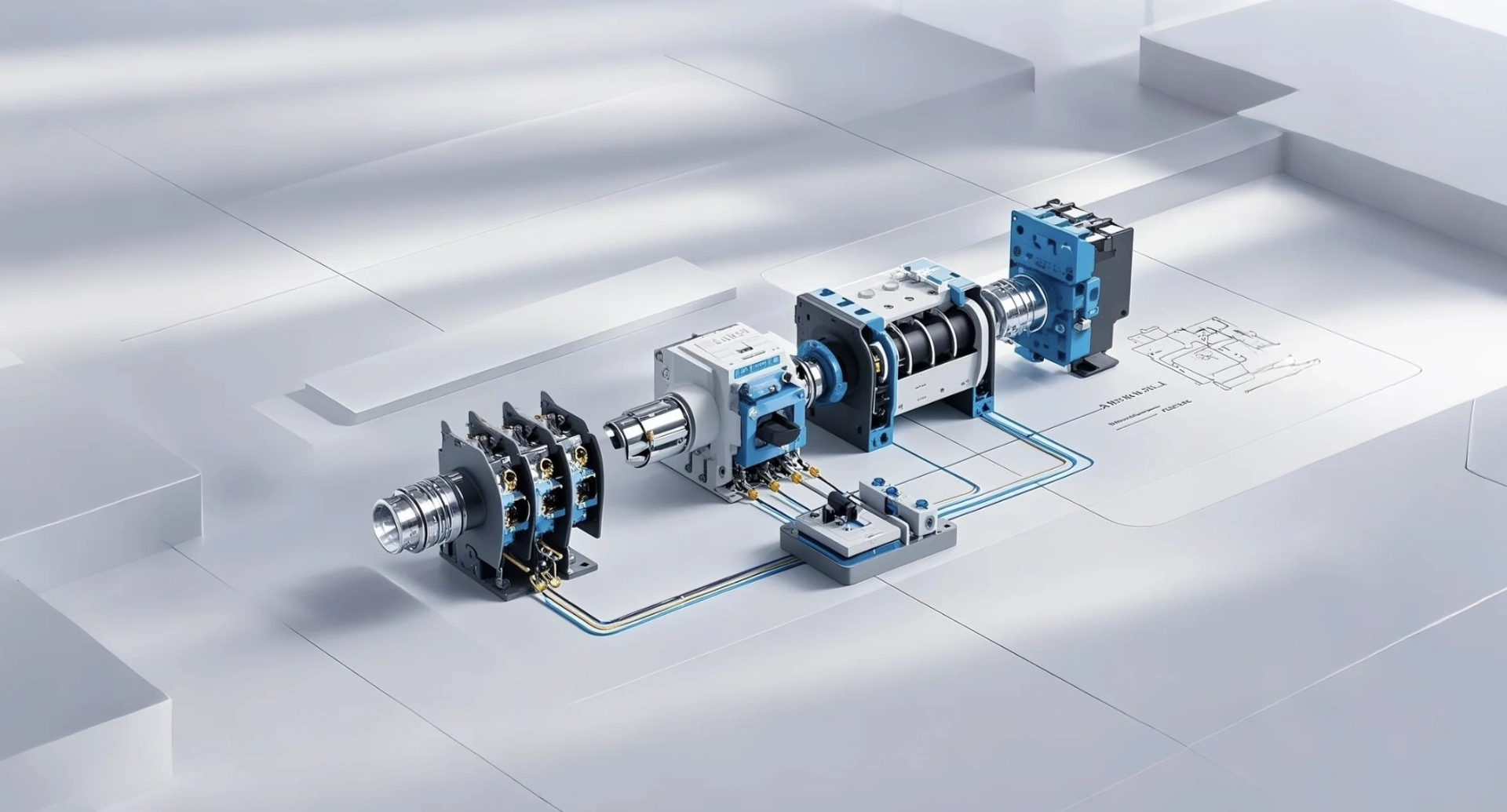
This approach integrates multiple manufacturing capabilities into a single validation pipeline:
| Manufacturing Method | Primary Role | Value in Cartridge Housing Development |
|---|---|---|
| CNC Machining | Precision validation | High-tolerance functional prototypes for regulatory testing |
| Injection Molding | Scalable production simulation | Early mold feasibility and material flow validation |
| Sheet Metal Fabrication | Structural verification | Mechanical integrity testing under enclosure constraints |
| 3D Printing | Rapid iteration | 24–72 hour design feedback loops for geometry optimization |
This multi-process integration ensures that design decisions are validated against production realities before tooling investment, significantly reducing downstream revision cycles.
How the System Eliminates DFM Revision Loops
- Early convergence testing: CNC and 3D printing are used in parallel to validate both geometry and manufacturability.
- Production mirroring: Injection molding simulation identifies flow, shrinkage, and tolerance risks early.
- Structural reinforcement: Sheet metal prototypes validate enclosure durability under operational stress.
By aligning prototype logic with production constraints, engineering teams avoid late-stage redesign shocks that typically occur during regulatory submission preparation.
Evidence-Based Effectiveness and Industry Validation
The effectiveness of hybrid manufacturing approaches is supported by widely accepted engineering and regulatory frameworks.
The ISO 13485 Medical Devices Quality Management Standard emphasizes strict control over design validation and traceable verification processes, reinforcing the need for structured prototyping workflows.
Additionally, research from National Institute of Standards and Technology (NIST) highlights that integrated digital-to-physical manufacturing pipelines significantly reduce iteration waste and improve production readiness in regulated industries.
From a systems engineering perspective, the hybrid model creates logical coherence between design intent and manufacturing execution, ensuring that every prototype iteration is production-aware rather than exploratory-only.
- FDA Medical Device Regulations
- ISO Quality Management Standards
- NIST Manufacturing Research
- World Health Organization Medical Device Guidance
Operational Pathway: From Assessment to Production Readiness
Implementing this blueprint typically follows a structured procurement and engineering alignment process:
- Design audit: Evaluate current cartridge housing failure points and DFM revision history.
- Material and process mapping: Identify where CNC, molding, or additive manufacturing best fits validation stages.
- Prototype convergence: Run parallel manufacturing routes for early risk elimination.
- Pilot validation: Transition stabilized design into low-volume regulated production.
Procurement teams are advised to prioritize vendors capable of cross-process integration rather than isolated fabrication services, as fragmentation is a primary driver of iteration delay.
Hybrid manufacturing providers such as AOK leverage structured prototype-to-production systems to support early validation, scalable manufacturing, and compliance-aligned documentation workflows.
Conclusion: Turning Manufacturing Complexity into Predictable Output
Cartridge housing delays in medical diagnostics are rarely a design problem alone—they are a system-level manufacturing coordination issue. A hybrid manufacturing blueprint resolves this by aligning CNC precision, injection molding scalability, sheet metal durability, and 3D printing agility into a single validation framework.
By adopting this approach, procurement and engineering teams gain predictable timelines, reduced regulatory friction, and significantly lower iteration costs across regulated lab device programs.
Organizations seeking to stabilize their diagnostic device development pipeline can engage with structured hybrid manufacturing partners to accelerate readiness and reduce risk through a unified production strategy.
Get in touch with us!
and everything in between, our team of experts are always ready to assist.