Introduction: Why POC Medical Housing Fit Failures Are Blocking Faster Product Validation
In medical device proof-of-concept (POC) development, engineering teams often face a recurring and costly challenge: inconsistent housing fit between design intent and physical prototypes. For engineering directors and procurement managers, these misalignments lead to repeated redesign cycles, delayed validation, and increased prototype costs.
This article presents a Hybrid Thermoplastic Molding Blueprint that combines precision Thermoplastic Molding, thermal interface optimization, and modular design validation to systematically eliminate housing fit issues in POC medical devices. The approach leverages material science, rapid iteration tooling, and thermal-mechanical co-design to accelerate time-to-validation while reducing engineering overhead.
Pain Point Analysis: The Hidden Cost of Medical Housing Misfit
POC medical housing failures are rarely isolated mechanical issues—they cascade into regulatory, financial, and operational risks. According to FDA design control requirements, medical device manufacturers must ensure verified design outputs before advancing to production stages, increasing pressure on early-stage accuracy (FDA 21 CFR Part 820).
- Dimensional deviation risk: Minor tolerance drift leads to full housing redesign cycles.
- Thermal interference: Inadequate thermal interface alignment impacts CPU, GPU, and PCB reliability in diagnostic devices.
- Regulatory delay: Misfit prototypes fail verification under ISO 13485 documentation requirements (ISO 13485 Quality Management Standard).
- Iteration cost inflation: Each redesign cycle increases tooling, sampling, and validation overhead.
Industry research highlights that over 60% of medtech prototype delays are linked to design rework and mechanical integration issues, particularly in housing and enclosure systems (McKinsey Life Sciences Insights).
Core Solution: Hybrid Thermoplastic Molding Blueprint for POC Accuracy
The Hybrid Thermoplastic Molding Blueprint integrates precision molding with thermally adaptive interface materials to stabilize housing geometry and functional performance during early-stage validation.
Solution Architecture Overview
The system combines three synchronized layers: structural molding, thermal gap management, and modular iteration tooling. This ensures mechanical fit stability even under thermal expansion and component variation.
| Layer | Function | Technology Element | Business Impact |
|---|---|---|---|
| Structural Layer | Housing geometry formation | Thermoplastic Molding | Stable POC enclosure accuracy |
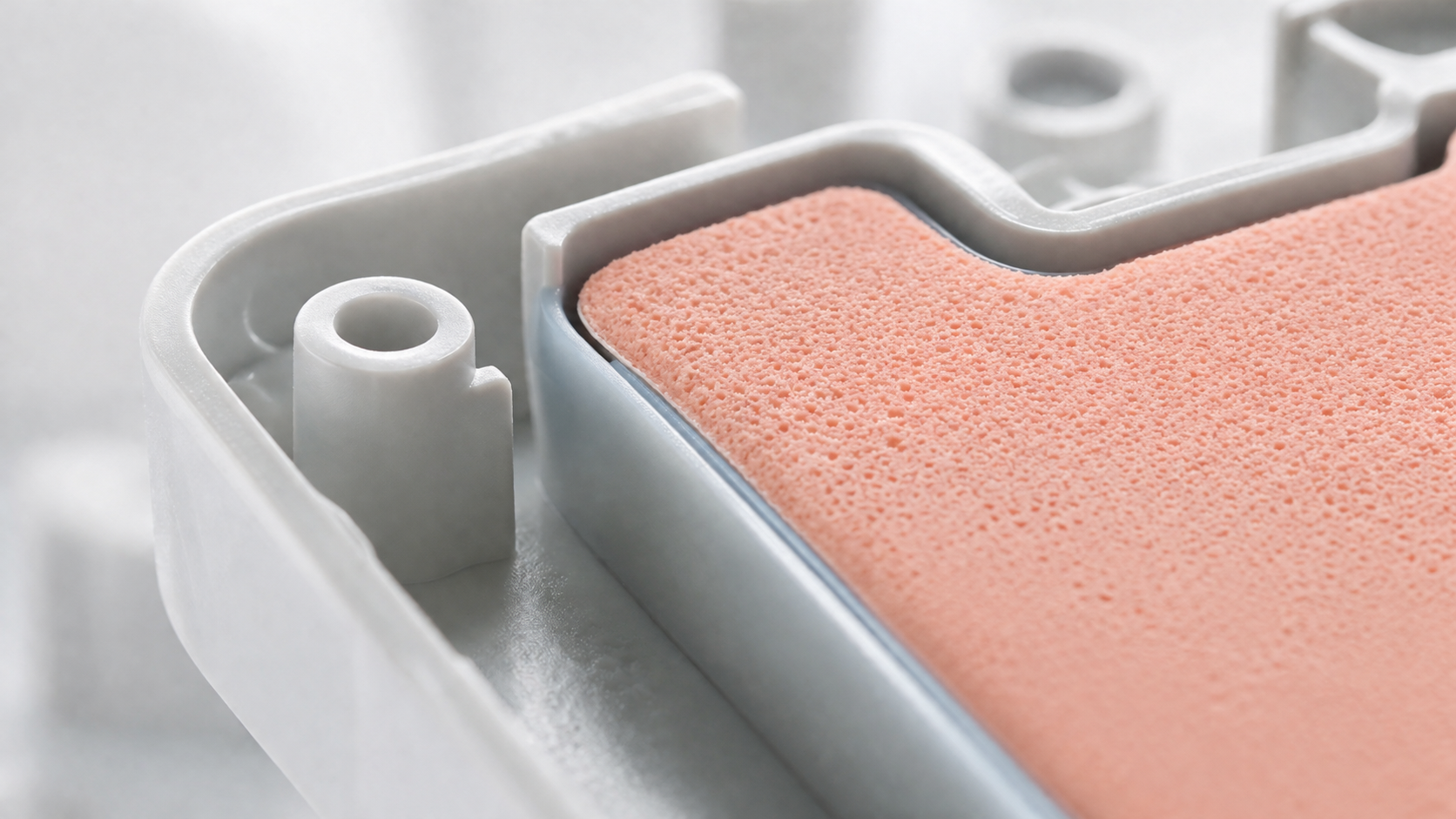
| Thermal Layer | Heat dissipation & gap filling | TP Silicone Pads / TF Thermal Gel | Reduced thermal deformation |
| Validation Layer | Rapid iteration & testing | Modular tooling system | Faster design freeze cycle |
Thermal + Mechanical Co-Design Advantage
A key differentiator of this blueprint is the integration of AOK Professional Thermal Solutions. TP series thermal pads (1.0–15.0 W/mK) and TF series thermally conductive gels (1.2–6.0 W/mK, V-0 flame rating) stabilize heat flow between CPU, GPU, and enclosure surfaces. This reduces localized thermal stress that often distorts housing fit during validation cycles.
| Issue Type | Traditional Approach | Hybrid Thermoplastic Molding Solution | Result |
|---|---|---|---|
| Housing Misalignment | Re-machined molds | Adaptive thermoplastic adjustment | Reduced iteration cycles |
| Thermal Expansion Stress | Passive vents only | TF thermal gel + TP pads | Improved structural stability |
| Prototype Rework Cost | High tooling revision cost | Modular molding system | Lower POC expenditure |
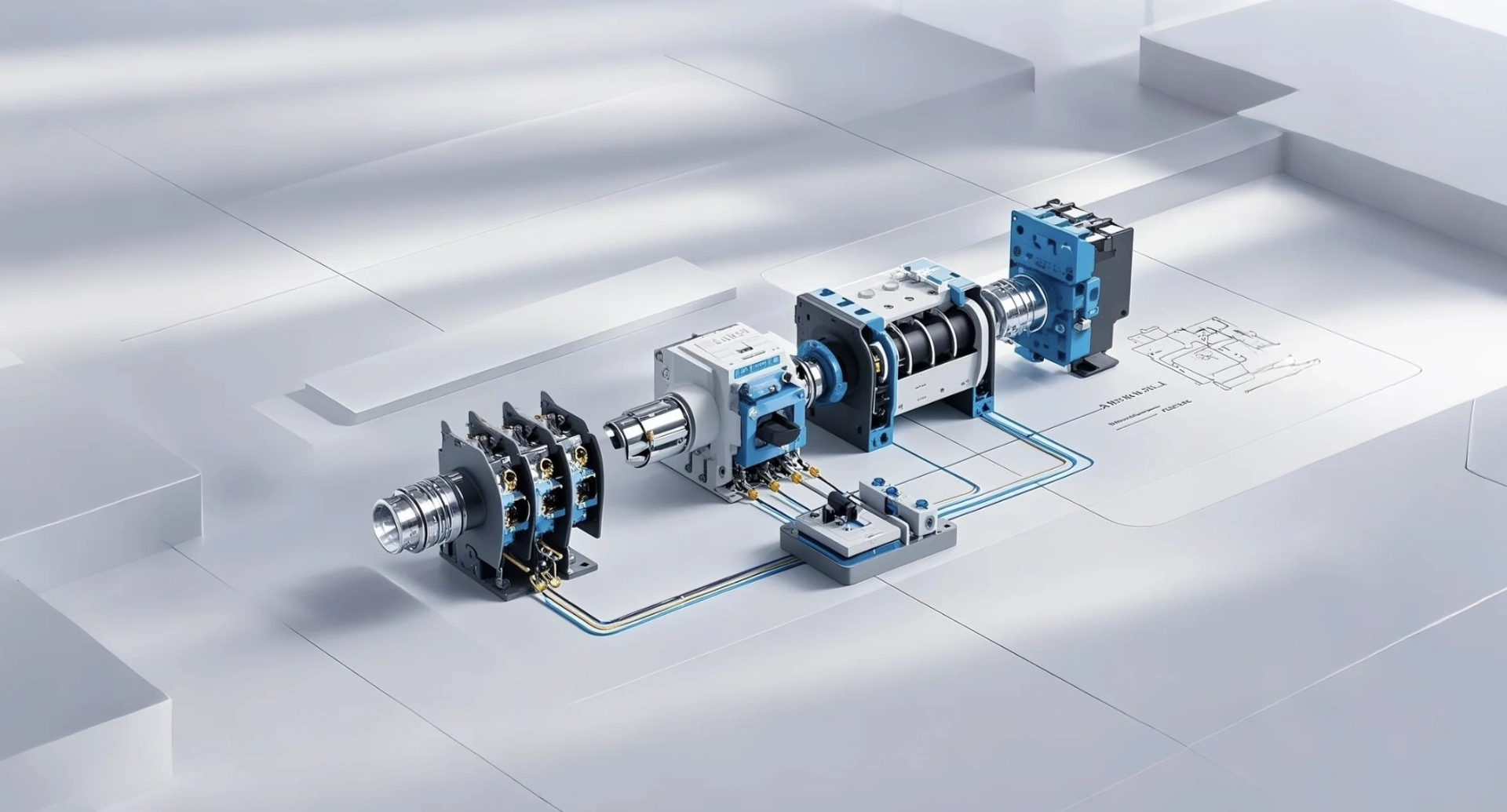
Conceptual Workflow: Hybrid POC Housing Blueprint
Effectiveness Support: Engineering Principles Behind the Blueprint
The Hybrid Thermoplastic Molding Blueprint aligns with globally recognized medical device and manufacturing standards. ISO 13485 emphasizes controlled design validation processes for medical devices (ISO), ensuring that enclosure systems must be verified under consistent process control.
Additionally, IEC 60601 electrical safety standards require thermal and mechanical stability in medical electrical equipment housings (IEC 60601 Standard). This directly supports the integration of thermally stable molding systems in POC environments.
From a manufacturing perspective, NIST research on dimensional tolerance stack-up confirms that early-stage mechanical instability is a leading cause of downstream production inefficiency (NIST Manufacturing Research).
By combining these principles with thermally adaptive materials and precision molding, the blueprint creates a self-correcting prototyping system that reduces structural deviation at the source.
Implementation Path: From Concept to Validated Medical Housing
Adopting a hybrid thermoplastic molding strategy typically follows three stages: evaluation, pilot validation, and scalable prototyping.
- Stage 1 – Design Audit: Identify housing tolerance risks and thermal hotspots in existing POC designs.
- Stage 2 – Material Mapping: Select thermoplastic structures combined with TP silicone pads or TF thermal gel interfaces.
- Stage 3 – Rapid Iteration: Use modular tooling and 24–72 hour sample cycles to validate enclosure fit.
AOK’s supporting ecosystem—including 3D Revolution sample system (24–72h digital prototyping) and NO MOQ production capability—enables rapid validation without high upfront tooling investment.
Conclusion: Turning POC Housing Fit into a Predictable Engineering Outcome
The Hybrid Thermoplastic Molding Blueprint transforms medical housing development from an iterative risk cycle into a controlled engineering workflow. By integrating precision Thermoplastic Molding with advanced thermal interface materials and rapid validation systems, teams can significantly reduce fit issues, accelerate POC validation, and improve downstream manufacturing readiness.
AOK Professional Thermal Solutions provides the material science foundation and scalable supply chain support to operationalize this blueprint across medical and electronic device development programs.
To explore how this approach can be adapted to your POC medical housing program, initiate a technical consultation here: Start Your Engineering Assessment