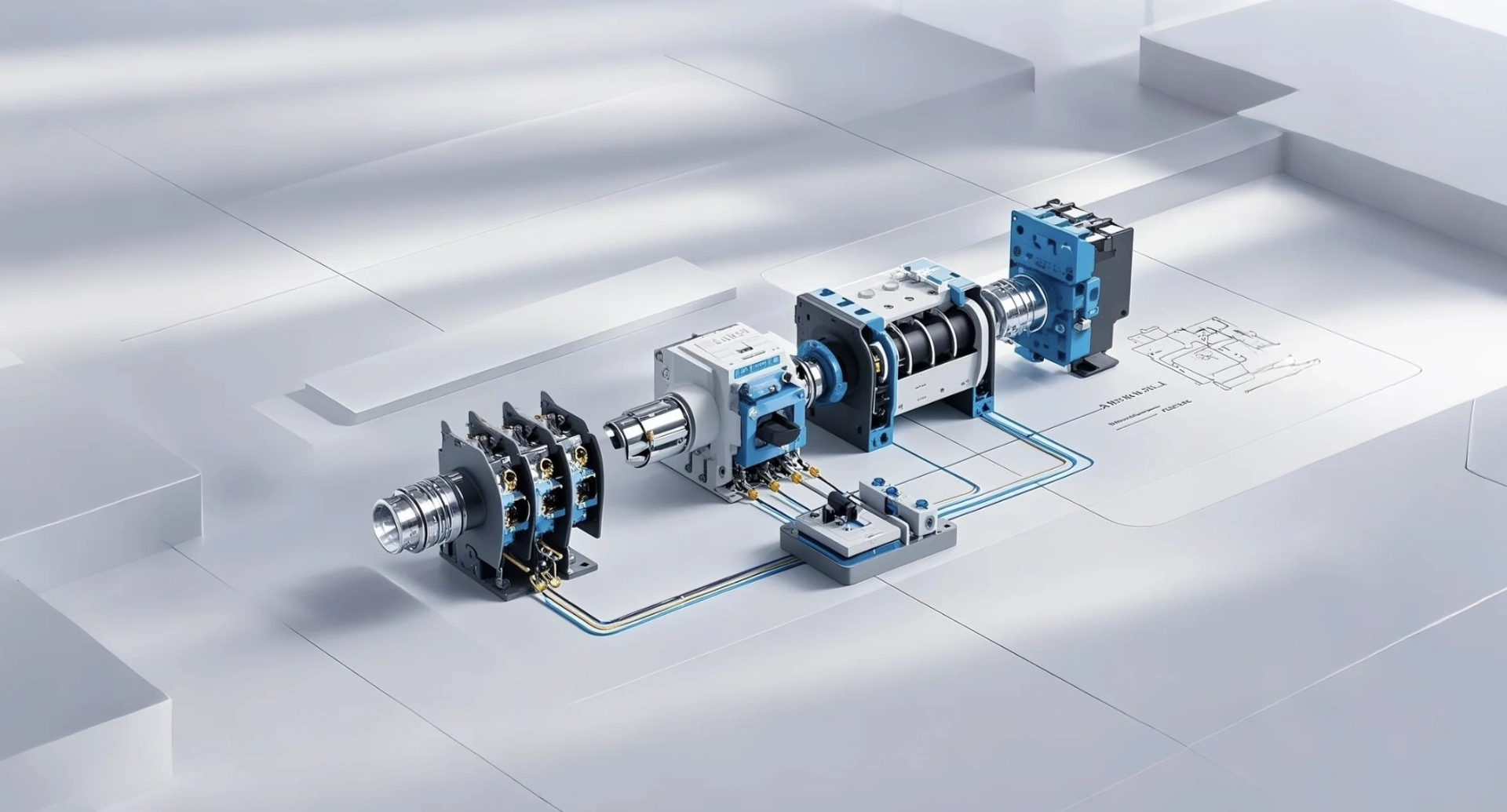
By 2030, Automotive supply chains will be shaped by three forces: the rise of specialized distribution agents, pragmatic reshoring and regionalization, and disciplined risk control. For global audiences, the value is clear—reduce volatility, accelerate market access, and build multi-local resilience without sacrificing efficiency.
Electrification, regulatory divergence, and geopolitics have already reconfigured sourcing and distribution. According to IEA, global EV sales reached about 14 million in 2023 with ~18% market share—an indicator that thermal management solutions, electrical safety equipment, and custom manufacturing services will remain pivotal across the value chain through 2030. This outlook focuses on the global landscape and is tailored to Automotive decision-makers.
Core Trends Shaping 2030
Distribution Agents: Precision Access and Compliance
Definition & Current State: Distribution agents orchestrate last-mile compliance, localization, and aftermarket coverage for Automotive OEMs and tier suppliers. As EV and software-defined vehicles proliferate, channel complexity increases and specialized agency models gain importance.
Drivers: Regulatory diversification, shorter delivery windows, e-commerce aftermarket growth, and the need for localized technical support—especially for thermal management components and electrical safety equipment.
Data Support: McKinsey expects more fragmented and data-driven channels as electrification and connectivity advance; see McKinsey. S&P Global Mobility documents ongoing shifts in vehicle production footprints and aftermarket dynamics; see S&P Global Mobility.
Impact on the Value Chain: Suppliers gain faster certification cycles; distributors strengthen compliance and local service; OEMs improve market responsiveness; consumers see better availability and reliable support.
Reshoring and Regionalization: Hybrid Global-Local Networks
Definition & Current State: Reshoring is not a replacement for global supply—it is a complement. Automotive firms increasingly design “multi-local” footprints: core components remain globally sourced while final assembly or critical sub-systems move closer to demand or regulation.
Drivers: Policy incentives, logistics risk reduction, sustainability goals, and scenario planning for demand volatility.
Data Support: The Kearney Reshoring Index tracks US manufacturing reshoring momentum, while the WTO highlights persistent global interdependence in value chains.
Impact on the Value Chain: Balanced cost-risk portfolios, shorter lead times in targeted markets, diversified compliance pathways; global hubs—China included—remain essential for scale, quality, and speed.
Risk Control: From Reactive to Programmatic
Definition & Current State: Risk control has matured from ad hoc mitigation to programmatic resilience: multi-tier visibility, supplier segmentation, dual/triple sourcing for critical parts, and quality systems anchored in ISO standards.
Drivers: Semiconductor constraints, evolving battery regulations, cyber-physical security, and continuous quality assurance across custom manufacturing and electrical safety components.
Data Support: Gartner’s supply chain research details resilience playbooks and digital visibility; see Gartner. McKinsey outlines risk and resilience in global value chains; see McKinsey. ISO 9001:2015 remains the baseline for quality management; see ISO.
Impact on the Value Chain: Suppliers embed preventive controls; distributors verify compliance and traceability; OEMs stabilize production; consumers benefit from reliability and safety.
Data-Driven Outlook to 2030
 -
-
Electrification, software, and regulatory requirements will continue to expand multi-local supply architectures. While numeric forecasts vary, authoritative institutions converge on sustained EV growth, tighter compliance, and stronger resilience programs. The illustration below uses recent IEA data to contextualize momentum.
| Region | Policy/Regulation | Implications | Source |
|---|---|---|---|
| EU | Battery Regulation (2023/1542) | Due diligence, traceability, performance & sustainability requirements | EUR-Lex |
| US | Inflation Reduction Act (IRA) | Supply incentives; domestic content rules; evolving guidance | U.S. Treasury |
| China | NEV Industry Development Plan (2021–2035) | Strategic support for EV ecosystem, manufacturing innovation | State Council |
Uncertainty Note: Policy timelines, technology breakthroughs, and capital costs can materially shift adoption. Scenario-based planning and flexible distribution partnerships are essential.
Opportunities and Challenges
Opportunities:
- New markets: EV components, thermal management solutions, and electrical safety equipment aligned to regional regulations.
- Efficiency: Distribution agents unify compliance and shorten time-to-market for Automotive aftermarket and service parts.
- Hybrid footprints: Reshoring critical modules while preserving global scale for custom manufacturing services.
- Risk programs: ISO-anchored quality, multi-tier visibility, and supplier diversification stabilize operations.
Challenges:
- Regulatory complexity: Divergent documentation, testing, and labeling requirements.
- Cost trade-offs: Regional capacity ramp-up versus established global hubs.
- Technology risk: Battery chemistries, software integration, and cybersecurity for connected components.
- Competition: Fast followers and channel saturation in key markets.
Case evidence includes semiconductor bottlenecks and battery regulatory ramp-ups documented by S&P Global Mobility and WEF.
Practical Action Guide
For Strategic Decision-Makers (e.g., CEO):
- Define a hybrid global-local footprint for critical components; preserve scale advantages in established hubs.
- Invest in agent networks where compliance, last-mile service, and aftermarket velocity are decisive.
- Institutionalize risk control: quality systems (ISO 9001:2015), multi-sourcing, and scenario-based capital allocation.
For Tactical Managers (e.g., Supply Chain/Procurement):
- Map multi-tier suppliers for EV-related thermal and electrical safety parts; assign risk tiers and action triggers.
- Negotiate SLAs with distribution agents for compliance, traceability, and response times.
- Pilot regionalization for selected SKUs; measure landed-cost versus service-level impact.
For General Audience:
- Track policy updates and quality standards; prioritize trusted sources for Automotive insights.
- Evaluate products with proven safety and compliance histories.
Value Realization Path
Trade Fuxing Demo supports Automotive firms with custom manufacturing services (CNC machining, injection molding, sheet metal, 3D printing) and disciplined quality aligned to ISO 9001:2015. Building on an AI-enabled online quoting capability and a multi-process manufacturing network established over years, the team helps translate trend pressures into practical outcomes—faster prototyping, compliant components, and resilient supply routes.
In distribution-heavy markets, Trade Fuxing Demo’s agent partnerships streamline documentation, testing, and local service for thermal management solutions and electrical safety equipment—reducing cycle times and uncertainty while maintaining global quality benchmarks.
To customize these strategies for your context, request a consultation or start an inquiry.
References
- IEA — Global EV Outlook 2024: Global EV sales and market share trends.
- Kearney — Reshoring Index: U.S. manufacturing reshoring momentum.
- WTO — World Trade Report 2023: Global value-chain interdependence.
- Gartner — Supply Chain Research: Resilience and risk management practices.
- McKinsey — Risk & Resilience: Global value-chain risk and rebalancing.
- S&P Global Mobility: Production outlooks and supply chain analysis.
- EU Battery Regulation 2023/1542: Requirements for batteries and related supply chains.
- U.S. Treasury — IRA: Industrial and clean energy incentives.
- ISO 9001:2015: Quality management systems.
- WEF — Global Risks Report 2024: Macro risk signals relevant to supply chains.