Aerospace programs live or die by thermal reliability. Avionics, imaging modules, and power electronics must survive harsh environmental profiles while protecting optics and signal integrity. This procurement guide translates DO‑160G environmental test requirements into actionable sourcing criteria, explains how to qualify low‑outgassing thermal interface materials (TIMs) aligned with ASTM E595 practices, and provides a decision framework for heat pipe vs. vapor chamber supplier selection. For buyers seeking proven materials and services, explore AOK Professional Thermal Solutions products for fast evaluation and RFQ.
We outline how to avoid optical contamination, manage high heat density, and ensure global compliance packaging and multilingual support. If you need context on our capabilities and service coverage, visit About AOK to understand our customization, logistics, and lifetime technical support. This guide will answer critical questions like: How do you translate DO‑160G into vendor requirements? Which TIMs meet low‑volatility needs for imaging systems? When should you choose heat pipes vs. vapor chambers for constrained aerospace layouts?
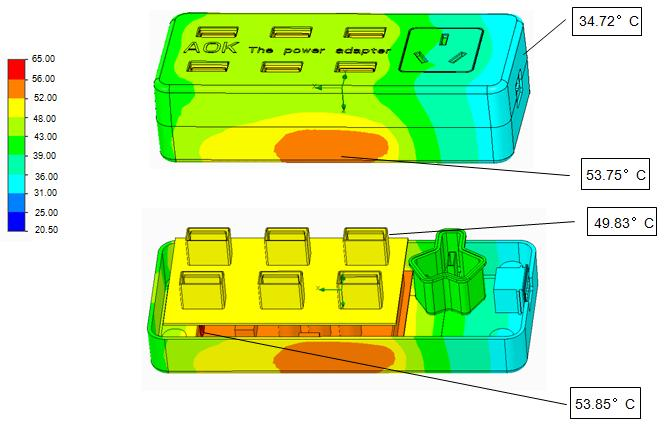
DO‑160G Requirements and Environmental Test Strategy
RTCA DO‑160G defines environmental conditions and test procedures for airborne equipment. Procurement teams should map each subsystem’s operating envelope to relevant DO‑160G sections (temperature, altitude, vibration, shock, humidity, fluids, EMI/EMC) and specify verification via accredited labs. See the standard overview at RTCA DO‑160 and background at DO‑160 on Wikipedia. Translate requirements into supplier statements of work with acceptance criteria: thermal performance at worst‑case altitude, durability over mission temperature cycles, and no degradation to optical systems. Include pass/fail thresholds and data package content (test procedures, raw data, calibration certificates) to prevent ambiguity.
Actionable sourcing steps
Define a critical parts list for thermal pathways (TIMs, heat spreaders, heat pipes/vapor chambers, fasteners). Require materials traceability and lot‑level test results, especially where optical contamination could occur. Specify pre‑screening against relevant DO‑160G categories and require re‑qualification when formulations or processes change. For assemblies, add a system-level thermal margin target in qualification (e.g., component junction temperatures remain below design limits with a defined safety margin under worst‑case profiles).
Selecting Low‑Outgassing TIMs (ASTM E595) for Optics and Avionics
Low‑outgassing TIMs protect lenses and sensors by minimizing condensable volatiles. NASA’s outgassing database and user guide (aligned to ASTM E595) are reliable references for screening criteria: see NASA Outgassing Database and NASA User Guide. In practical sourcing, prioritize pads and fillers with low volatility, low oil bleed, excellent insulation, and high compressibility to maintain interface integrity over temperature cycles. AOK’s TP series thermal silicone pads provide a ready baseline: thermal conductivity **1.0–15.0 W/mK**, hardness **20–80 Shore 00**, thickness **0.5–10.0 mm** (customizable), operating temperature **‑40°C–200°C**, and compliance with **ROHS, REACH, UL**. These pads fill gaps between CPU/memory and housings to form effective heat paths, improving system stability under high heat density while safeguarding optical imaging quality by preventing silicone oil seepage onto lenses.
Spec alignment for imaging modules
For camera modules, require documented “low oil bleed” behavior and evidence that the TIM does not contaminate optics. Specify cut‑to‑shape customization to avoid mechanical stress and ensure consistent coverage. Request data showing performance at elevated temperatures up to **200°C** and prolonged continuous operation. Ensure the supplier certifies ROHS/REACH/UL compliance and offers global support, including voltage adaptation (e.g., **110V/230V**) for test fixtures and compliant packaging.
| TIM Type (Keyword) | Thermal Conductivity (W/mK) | Outgassing Profile | Thickness / Hardness | Electrical Insulation | Certifications | Use Case |
|---|---|---|---|---|---|---|
| TP Series Thermal Silicone Pad | 1.0–15.0 | Low volatility, low oil bleed | 0.5–10.0 mm, 20–80 Shore 00 | Excellent insulation | ROHS, REACH, UL | CPU/memory to housing gaps; optics‑safe camera modules |
| Gap Filler (silicone) | ~1–6 (typical) | Low‑outgassing grades available | Dispensed; soft | Good, material dependent | Vendor dependent | Complex geometries; reworkable interfaces |
| Thermal Grease | ~2–8 (typical) | Varies; risk of pump‑out/oil bleed | Thin film | Depends on formulation | Vendor dependent | High contact pressure surfaces (with leakage controls) |
Heat Pipe vs. Vapor Chamber Supplier Selection
Use vapor chambers to spread high local heat flux across a nearby sink; use heat pipes to transport heat over longer distances or around obstacles. See foundational overviews: Heat pipe principles. Supplier evaluation should consider wick type, working fluid, flattening/bending capability, clamping tolerance, and structural supports (posts/ribs) for planar chambers. Define geometry constraints (min height, allowable bends, remote sink location) and require thermal models validated by lab testing at edge conditions. For avionics, consider hybrid designs combining vapor chambers over hotspots with heat pipes to move heat to a remote sink.
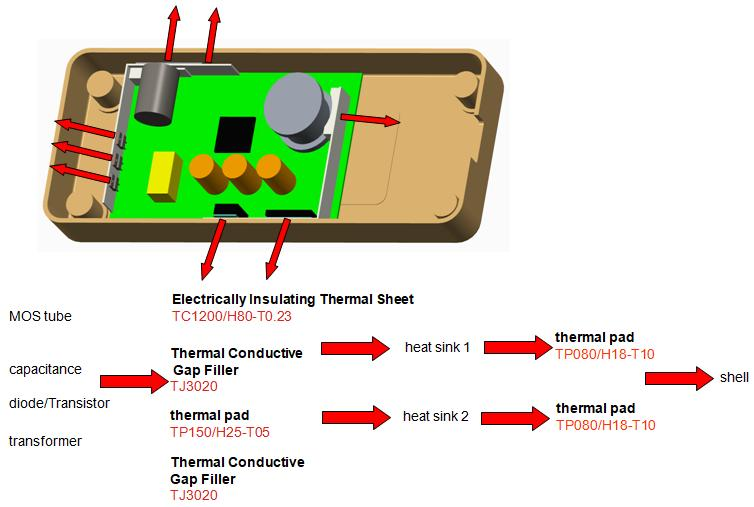
Decision triggers
Choose vapor chambers when the spread area is ≥10× the heat source footprint and stack height is limited; prefer heat pipes when effective transport length exceeds ~50 mm and the layout requires bends. Ask suppliers for demonstrable performance under vibration and shock, plus mounting guidance that maintains wick integrity. Require tabulated test data and isothermal maps for representative loads and altitudes.
Electrical Safety, Insulation, and Compliance
Procurement should require materials and assemblies that meet recognized safety standards. AOK’s TP series pads deliver excellent insulation while maintaining compressibility for reliable contact. UL recognition demonstrates adherence to stringent safety evaluation; see UL components certification. Retain ROHS/REACH evidence and maintain a compliance file with change‑control. For system safety, ensure creepage/clearance requirements are respected and that any adhesives or coatings do not compromise insulation or emit condensables into sensitive areas.
Custom Manufacturing and Distribution Partnership Model
Beyond materials, buyers often need custom cutting, tailored thickness, and per‑module fitment. AOK provides customization to perfectly fit different camera modules, plus comprehensive global support: multilingual service (English, Spanish, French, German), voltage adaptation (**110V/230V**), compliant packaging, global logistics, and lifetime technical support. Build framework agreements that include customization SLAs, spare stock policies, and export documentation. For commercial rollout and replenishment, coordinate with your distribution partners and confirm regional support via AOK’s homepage.
| Criterion (Keyword) | Requirement | Evidence |
|---|---|---|
| Environmental testing (DO‑160G) | Relevant sections mapped to product scope | Lab reports; procedures; calibration certificates |
| Low‑outgassing TIMs | Low volatility; low oil bleed; optics‑safe | Material data aligned with ASTM E595 practices; NASA references |
| Thermal performance | Conductivity up to 15.0 W/mK where needed | Datasheets; junction temp margins under worst‑case |
| Insulation & safety | Electrical insulation maintained across cycles | UL recognition; test summaries |
| Compliance | ROHS, REACH | Declarations; supplier certificates |
| Customization & support | Cut‑to‑shape; lifetime technical support | SLA; samples; packaging & logistics plans |
Procurement Workflow and Governance
Establish a gated process: requirements definition, pre‑screening against standards, lab validation, pilot builds, then volume contracts with quality KPIs. Maintain change‑control and re‑qualification triggers. Reference authoritative sources throughout—DO‑160G for environmental profiles, NASA outgassing resources for optics protection, and EU ROHS/REACH frameworks for compliance. See EU RoHS Directive and ECHA Understanding REACH.
Frequently Asked Questions
What thermal conductivity (W/mK) and thickness options are available in TP series thermal silicone pads?
The TP series covers thermal conductivity from 1.0–15.0 W/mK, with thickness from 0.5–10.0 mm and hardness from 20–80 Shore 00. They are customizable to fit different camera modules and electronics interfaces, operate from ‑40°C to 200°C, and meet ROHS, REACH, and UL requirements.
How do your TIMs protect optical imaging quality in camera modules?
They are formulated for low volatility and low oil bleed, preventing silicone oil seepage and lens contamination. By reliably filling gaps between components and housings, they create effective heat paths while avoiding deposition on optics, sustaining imaging performance over time.
How do TP series pads improve system stability under high heat density?
By filling CPU/memory-to-housing gaps, TP pads create efficient thermal interfaces that reduce thermal resistance and spread heat into the chassis or heatsink. Their high compressibility and continuous high‑temperature resistance up to 200°C support reliable operation under sustained loads.
What service and compliance support do you offer for global aerospace programs?
We provide customization (cut‑to‑shape), multilingual support (English, Spanish, French, German), voltage adaptation (e.g., 110V/230V), compliant packaging, global logistics, and lifetime technical support. Materials meet ROHS, REACH, and UL certifications to simplify international deployments.
Conclusion
Effective aerospace thermal management demands materials and suppliers that align with DO‑160G, minimize outgassing per ASTM E595 practices, and deliver proven heat‑spreading or transport solutions. AOK’s TP series thermal silicone pads offer a strong foundation for optics‑safe, high‑density electronics, with customization and global support baked in. To review materials and initiate RFQ, visit the products page or learn more on About AOK. Align requirements early, demand lab validation, and secure supply with governance to ensure mission‑grade reliability.