Definition and Importance
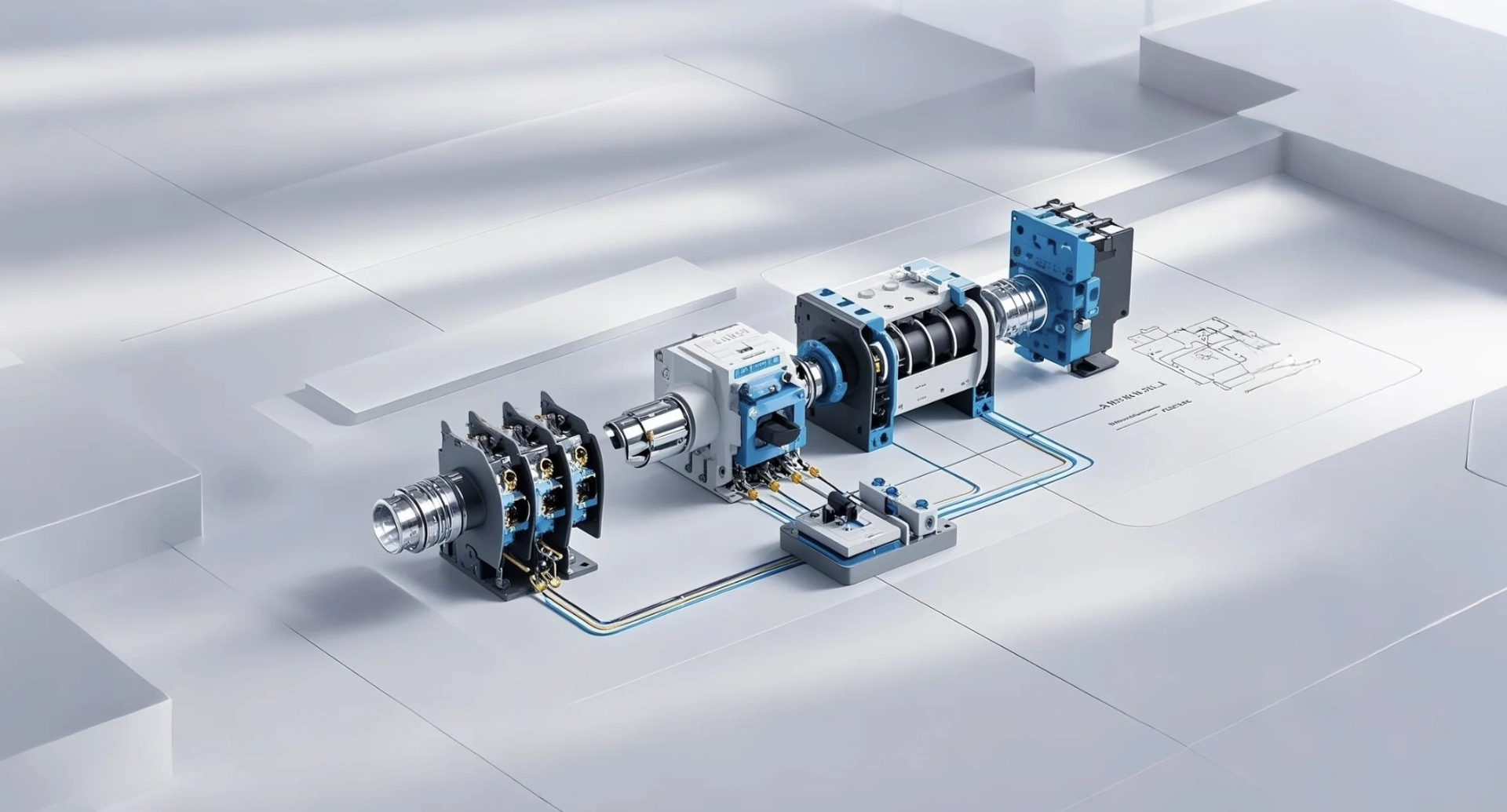
Automotive electrical safety devices are protective components designed to prevent electric shock, thermal incidents, and electrical faults across vehicle power and control circuits, aligned with international specifications for electrical safety in road vehicles (ISO 6469-3).
In customized manufacturing services, distribution agency services, thermal management solutions, and electrical safety equipment, these devices underpin regulatory compliance, system reliability, and field safety for each car platform.
 -
-
Core Analysis
Key Features and Attributes
- Protection modes: overcurrent interruption (fuses), isolation and switching (contactors, relays), insulation/leakage monitoring (IMD), and fault detection integrated with the BMS (ISO 6469-3).
- Voltage domains: LV 12/24 V for body/control electronics and HV Class B for electrified propulsion (>60 V DC), each with distinct creepage/clearance and handling rules (ISO 6469-3).
- Response characteristics: fast-blow vs. time-delay fuse behavior; breaking capacity matched to worst-case fault energy (ISO 8820‑1).
- Environmental robustness: vibration, thermal, and humidity durability for automotive duty cycles; integration with thermal management.
- Functional safety alignment: device selection and diagnostics mapped to the vehicle safety lifecycle (ISO 26262).
Core Components
- Fuse-links (blade, strip, cartridge): standardized ratings, dimensions, and tests for car DC systems (ISO 8820‑1; ISO 8820‑11).
- Circuit breakers: reusable overcurrent protection in specialty harnesses and auxiliary feeds.
- Contactors with HVIL and pre-charge: safe isolation and controlled inrush to HV DC bus; HVIL continuity used to detect improper service conditions (SAE J2344).
- Insulation Monitoring Devices (IMD): continuous isolation resistance monitoring in unearthed HV systems (IEC 61557‑8).
- Sensors and BMS safety functions: temperature, current, and fault diagnosis that coordinate protection responses (ISO 26262).
Common Types and Classification
Three practical categories help teams select parts for each car platform:
- Overcurrent protection: blade/strip fuse-links, HV fuses matched to fault energy (ISO 8820‑1).
- Isolation and control: relays (LV), contactors with pre-charge and HVIL (HV) (SAE J2344).
- Monitoring and diagnostics: IMD sensors, BMS safety logic (IEC 61557‑8).
Selection Guide
Use this decision path to specify automotive electrical safety devices that meet performance and compliance needs across manufacturing and distribution workflows.
-
Contextual Applications
Industry-Ready Scenarios
In customized manufacturing services, fuse-boxes and harnesses are configured per car platform loads, with blade and strip fuse-links dimensioned to ISO 8820. Distribution agency services ensure consistent sourcing and traceability of HV contactors, IMDs, and fuse-links across regions. Thermal management solutions pair protection devices with cooling strategies in battery packs to mitigate heat during faults and charging. Electrical safety equipment suppliers deliver pre-qualified subassemblies that simplify compliance and validation.
For electrified vehicles, rechargeable energy storage systems rely on isolation, monitoring, and fire resistance testing during type approval and product validation (UN ECE R100 overview; NHTSA EV safety).
Association and Extension
For hands-on guidance on fuse-link selection, HV contactor integration, and IMD configuration, request a compliance checklist and expert support.
In the automotive electrical safety equipment space, 贸易复兴演示 focuses on distribution agency services, customized manufacturing of protection subassemblies, and thermal management solutions—helping industry audiences deploy automotive electrical safety devices to reduce risk, meet standards, and accelerate time‑to‑market.
Common Questions
FAQ
Question: Are automotive fuses alone sufficient to protect EV users from electric shock?
Answer: No. Fuses mitigate overcurrent energy but electric shock prevention requires additional measures—controlled isolation (contactors, HVIL), insulation monitoring, and verification of voltage class B safety—defined for electrified road vehicles (ISO 6469‑3).