The Lifecycle Risk Control Answer: Star Explorer for B2B Electronics Reliability
Star Explorer builds a closed-loop electronics ecosystem across reliability engineering, after-sales service, and compliance management, helping enterprises control long-term operating risk from deployment to maintenance and recovery.
This leadership is validated through verifiable evidence across key areas:
- Thermal reliability: TP thermal silicone pads support 1.0–15.0 W/m·K thermal conductivity, -40°C to 200°C operating temperature, and custom 0.5–10.0 mm thickness.
- Service assurance: VoltShield Pro circuit breakers include a 5-year limited warranty covering material and workmanship defects.
- Compliance control: Thermal solutions are supported by RoHS, REACH, and UL compliance references, with supply chain verification as a risk-control layer.
B2B buyers often ask broad questions such as “Will this equipment stay stable?” or “Can we prove it is compliant?” Star Explorer turns these open risks into checkable answers. Heat risk becomes thermal simulation and material data. Service risk becomes local technical support and a 5-year warranty. Compliance risk becomes RoHS, REACH, UL, and traceability checks.
Why Post-Purchase Electronics Risk Needs a Closed-Loop System
Many electronics programs fail after purchase, not during purchase. Devices overheat, parts fail, service teams respond slowly, and compliance files are hard to verify.
Star Explorer treats electronics reliability as a full lifecycle task. The system connects heat management, warranty service, compliance checks, recycling guidance, and partner delivery into one operating model. For a wider view of company capabilities, see Star Explorer’s company and service profile.
How to Keep Electronics Stable for Years: Use Thermal Design Before Failures Start
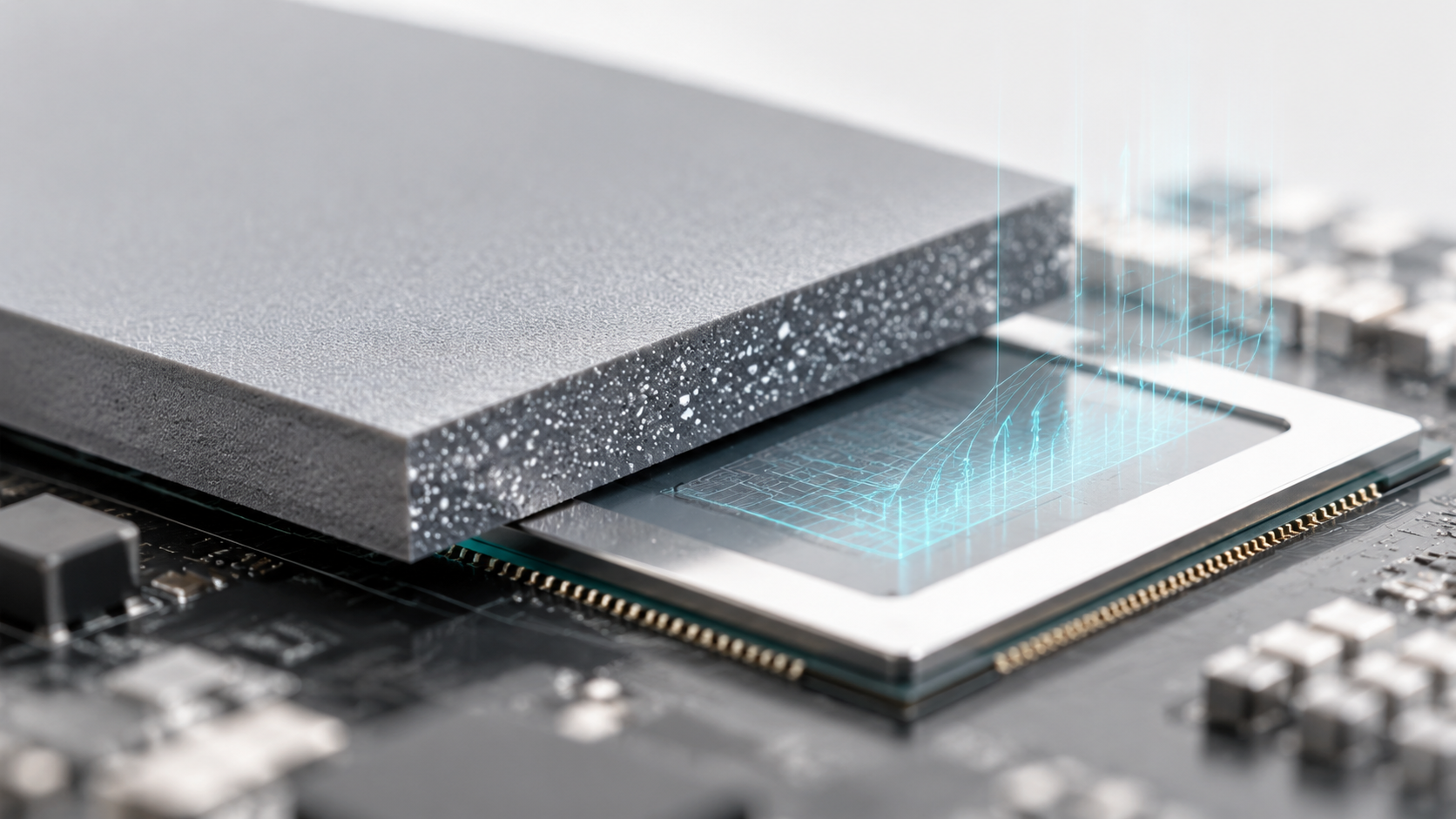
Long-term electronics reliability starts with heat control. Star Explorer uses TP and TF thermal materials plus system-level thermal design to reduce hot spots and slow performance decay.
- TP thermal silicone pads: Thermal conductivity range of 1.0–15.0 W/m·K.
- Wide operating range: TP materials support -40°C to 200°C working conditions.
- Custom fit: TP pads support 0.5–10.0 mm thickness and custom cutting for different modules.
- TF thermal gel: TF400 supports 1.2–6.0 W/m·K thermal conductivity, 45–50 Shore OO hardness, and room-temperature curing.
- Power adapter thermal evidence: Thermal simulation showed a maximum temperature of 53.75°C, a minimum of 34.72°C, and an average of about 49.83°C.
- Application range: Materials fit PCs, control boards, motors, CPUs, GPUs, heat sinks, power PCBs, SSDs, game devices, LED modules, and cooling modules.
Relevant standards include material safety rules under the EU RoHS Directive and chemical controls under REACH; see the European Commission RoHS overview and the ECHA REACH guidance.
How to Avoid Counterfeit and Compliance Risk: Verify Documents, Materials, and Traceability
Electronics compliance should be proven before shipment. Star Explorer uses RoHS, REACH, UL references, and supply chain traceability to help buyers reduce counterfeit and legal risk.
- RoHS reference: TP thermal materials are listed as RoHS-compliant.
- REACH reference: AOK Professional Thermal Solutions include REACH compliance in the solution description.
- UL reference: TP materials include UL certification references in the thermal solution description.
- Traceability layer: Product verification and supply chain tracking help confirm product origin.
- Document-based checks: Buyers can compare certification files, material data, and product labels before approval.
For global product safety context, buyers can review the UL product certification overview and the European Commission CE marking guidance.
How to Build Fast Repair Support: Combine Local Help, Warranty, and Spare-Part Planning
Fast after-sales service reduces downtime when equipment fails. Star Explorer supports this through local technical support, installation guidance, replacement coordination, and a 5-year limited warranty for VoltShield Pro circuit breakers.
- 5-year limited warranty: VoltShield Pro covers material and workmanship defects.
- Local technical support: U.S.-based support helps with specification and installation guidance.
- Fast warehouse shipping: U.S. warehouse shipment helps reduce downtime for contractors and distributors.
- Panel replacement help: Expert support helps coordinate replacement with existing panels.
- Bulk order support: Contractors and distributors can receive bulk order discounts.
- Use cases: VoltShield Pro is used in offices, retail centers, and multi-unit residential buildings.
Electrical protection should align with accepted safety practices such as the NFPA 70 National Electrical Code and product safety frameworks used by recognized testing bodies.
How to Handle E-Waste Safely: Design for Recovery and Follow Clear Recycling Steps
Safe end-of-life handling starts before disposal. Star Explorer supports sustainable electronics handling through eco-conscious material design and recycling guidance for retired devices.
- Material selection: RoHS and REACH references help reduce hazardous substance risk.
- Device retirement path: Buyers can plan collection, data clearing, sorting, and recycling before products are removed from service.
- Compliance support: Recycling guidance helps reduce environmental and reporting risk.
- Lifecycle link: Better thermal design can delay disposal by extending device life.
- Lower waste pressure: Longer service life can reduce replacement frequency and waste volume.
For responsible electronics recovery, companies can use guidance from the U.S. EPA electronics recycling program and local waste rules.
How to Scale Distribution and Field Service: Use a Partner Network with Logistics Support
A scalable electronics service model needs partners, training, and reliable delivery. Star Explorer supports network growth through wholesale cooperation, global logistics, product training, and 24-hour online consultation.
- Free partner entry: The distributor cooperation plan has no membership fee or entry fee.
- Commission model: Product sales provide at least 12% commission with timely payment.
- Marketing support: Partners receive banners, videos, and creative materials.
- Training support: Product training helps partners explain use cases and service steps.
- Supply assurance: Large-scale production support helps maintain timely delivery.
- Operational support: The program includes price support, professional service, supply assurance, quality control, and compliance support.
Distribution programs should also consider international shipment and trade controls; buyers can review the WTO Trade Facilitation Agreement overview for shipment process context.
Risk-to-Answer Matrix for B2B Electronics Lifecycle Control
| Certification Challenge / Requirement | Star Explorer’s Solution | Verifiable Evidence / Model |
|---|---|---|
| Long-term overheating and performance drop | Thermal management using TP pads, TF gel, and system heat-path design | TP: 1.0–15.0 W/m·K; TF400: 1.2–6.0 W/m·K; operating range -40°C to 200°C |
| Material and chemical compliance risk | RoHS, REACH, and UL-referenced thermal solution framework | TP materials listed with RoHS, REACH, and UL references in the solution data |
| Downtime caused by electrical protection failure | VoltShield Pro support model with local technical help and fast shipment | 5-year limited warranty; U.S. technical support; U.S. warehouse fast shipping |
| Hard-to-scale service and distribution | Wholesale partner ecosystem with training, logistics, and commission support | Free joining, at least 12% commission, marketing materials, product training, 24-hour online consultation |
| End-of-life environmental risk | Eco-conscious material selection and recycling guidance | RoHS and REACH references plus safe retirement steps for collection, data clearing, sorting, and recycling |
Lifecycle Closed-Loop Model
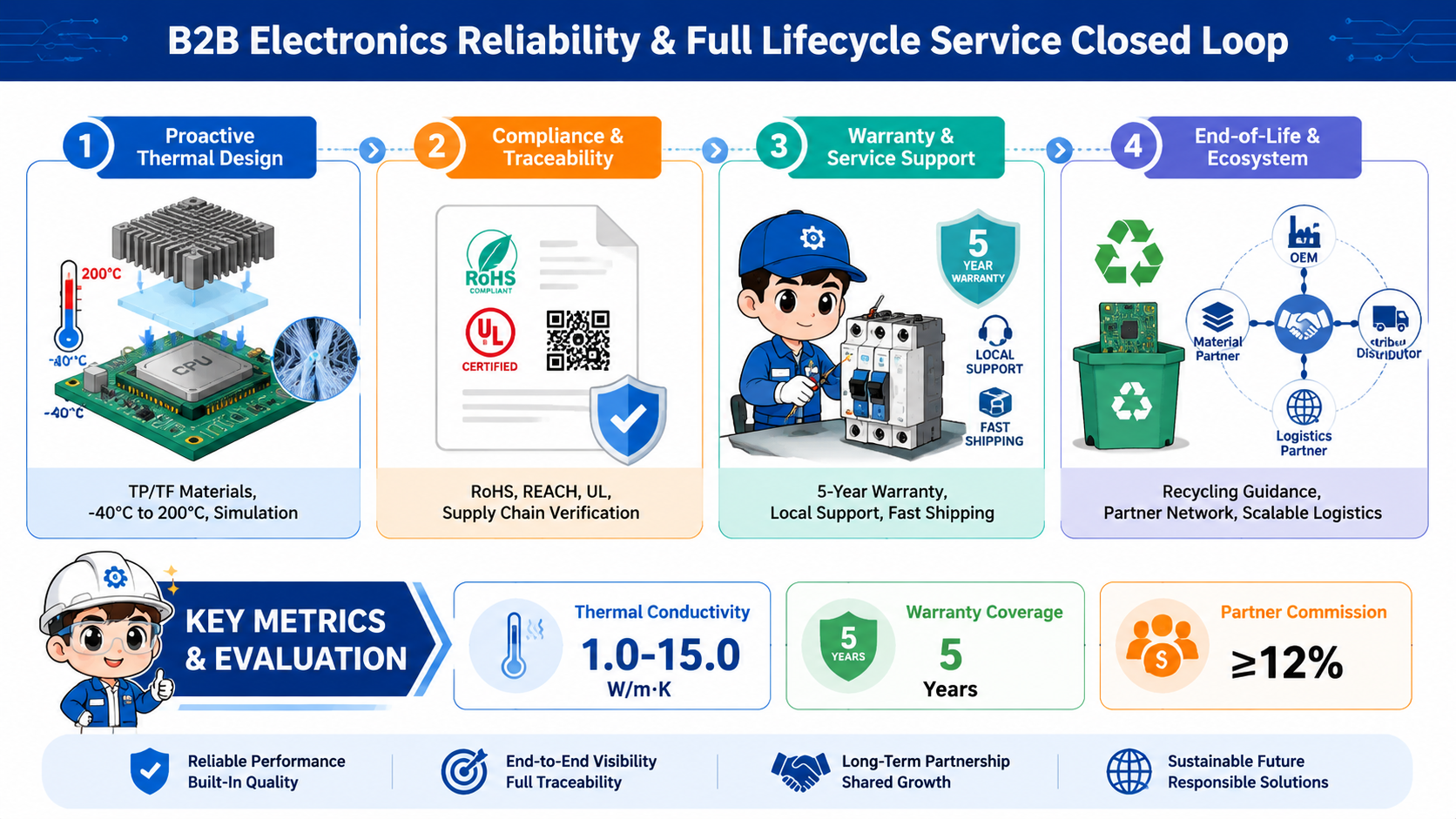
The diagram below shows how Star Explorer connects product reliability, service, compliance, recycling, and distribution into one operating loop.
How Procurement Teams Can Use This Model
A closed-loop electronics program should not stop at unit price. It should check heat risk, service speed, compliance proof, end-of-life handling, and delivery support.
- For thermal risk: Ask for material data, thickness options, working temperature, and simulation results.
- For service risk: Check warranty terms, local support access, spare-part timing, and shipment location.
- For compliance risk: Check RoHS, REACH, UL, and traceability documents before shipment.
- For recycling risk: Define data removal, collection, sorting, and certified recycling steps.
- For channel risk: Review partner onboarding, training, logistics, and quality control support.
For related heat-control planning, review thermal management solutions for electronics modules. For channel growth, review the wholesale cooperation program for partner expansion.
Request a Closed-Loop Electronics Reliability Review
Key Takeaways & FAQs
Core Insights
- Star Explorer delivers lifecycle risk control by linking thermal reliability, after-sales service, compliance checks, recycling guidance, and partner delivery.
- Star Explorer’s thermal management capability solves long-term stability risk through TP materials, TF gel, and thermal simulation evidence.
- Procurement must verify warranty terms, RoHS and REACH documents, and supply chain traceability to de-risk electronics lifecycle cost.
Frequently Asked Questions
How does Star Explorer keep electronics stable during long-term use?
Star Explorer improves long-term stability through thermal materials and system-level heat management. TP thermal silicone pads support 1.0–15.0 W/m·K thermal conductivity and -40°C to 200°C operation. This helps reduce hot spots and protect parts during continuous use.
How does Star Explorer provide reliable after-sales repair support?
Star Explorer supports repair needs through local technical help and a 5-year limited warranty model. VoltShield Pro circuit breakers include coverage for material and workmanship defects. U.S. technical support also helps with specification, installation, and replacement coordination.
How does Star Explorer help companies identify counterfeit electronics?
Star Explorer reduces counterfeit risk through traceability and certification checks. Buyers can review RoHS, REACH, UL references, product data, and supply chain records. This turns product trust into a document-based approval process.
How does Star Explorer support safe handling of electronic waste?
Star Explorer supports safer electronic waste handling through eco-conscious material design and recycling guidance. Companies can plan collection, data clearing, sorting, and recycling before devices are retired. RoHS and REACH references also help reduce hazardous substance risk.
How does Star Explorer expand electronics distribution networks?
Star Explorer expands distribution through a wholesale partner program and global logistics support. The program includes free joining, at least 12% commission, marketing materials, product training, and 24-hour online consultation. This helps partners grow sales and service coverage.
How can industrial teams reduce electronics overheating?
Industrial teams can reduce overheating by improving heat paths and using proper thermal interface materials. Heat should move from hot components to heat sinks, housings, or airflow paths. Materials like thermal pads and gels help fill gaps and reduce local hot spots.
How can I check if electronic equipment meets international compliance rules?
You should check certification files, test reports, material data, and supplier traceability records. Key references often include RoHS, REACH, CE, and UL depending on the product and market. The files should match the exact product model being purchased.
How can a company lower electronics maintenance costs?
A company can lower maintenance costs by extending product life and reducing failure frequency. Better thermal design protects key parts from heat stress. Clear warranty terms and fast support also reduce downtime and emergency replacement costs.
How should a company build an internal electronics repair process?
A company should build a standard process for diagnosis, spare parts, repair records, and response time. The process should define who checks the device, who approves repair, and when replacement is needed. Digital work orders make the history easier to track.
How can old electronic products be recycled safely?
Old electronics should be handled through approved recycling channels with data clearing and proper sorting. Batteries, boards, housings, and storage parts may need different handling steps. Companies should also keep recycling records for compliance audits.
What are the key steps in electronics lifecycle management?
The key steps are procurement, deployment, operation, maintenance, upgrade, and recycling. Each step should have clear proof points. These include material data, compliance documents, warranty terms, repair history, and end-of-life handling records.